Online Appointment Booking for Therapists: What a Good System Actually Needs
A practical guide for therapists, psychologists, and coaches: which booking system features actually matter — and which ones are just marketing.
If you run a therapy practice, this probably sounds familiar.
Between two sessions, the phone rings. At the same time, an email comes in asking about an appointment. A few minutes later, someone writes through the contact form on the website, asking if there's a slot free on short notice.
It's just about scheduling an appointment. And yet this small task eats up time every single day — not because booking is complicated, but because it runs across several channels at once: phone, email, and the contact form, often for the very same slot. Many therapists still work with a mix of phone calls, emails, a calendar, and handwritten notes. It works — until the practice gets busier.
Why standard booking tools often fall short
There are plenty of booking systems out there. For hair salons or gyms, they usually work just fine. In a therapy practice, though, the requirements are often different: it's not just about picking a free slot, it's about sensitive personal data, different appointment types, clear cancellation rules, and a process that works smoothly for both the practice and the patient. A generic booking tool usually only covers part of that.
What therapists actually need
Every practice works a little differently. Still, a few features tend to matter across the board.
1. Data protection should be a given
Even a simple booking request involves processing personal data. That's worth looking at closely: Where is the data stored? Are servers located in the EU? Is there a data processing agreement in place? Is only the necessary data actually being collected? In healthcare, data protection shouldn't be an afterthought — it should be the foundation the whole system is built on.
2. Automatic reminders
Cancellations can never be fully avoided. A friendly reminder the day before, though, helps many patients remember their appointment — and saves the practice a fair number of phone calls in the process.
3. Simple cancellations
Sometimes an appointment just doesn't work anymore. What matters is that patients can cancel it themselves, without hassle — for example through a link in the confirmation email, instead of having to call the practice. That saves time and frees up the slot for someone else.
4. Different appointment types
An initial consultation usually takes longer than a regular session, and not every service costs the same. Each appointment type should have its own duration and price, instead of treating every booking the same way.
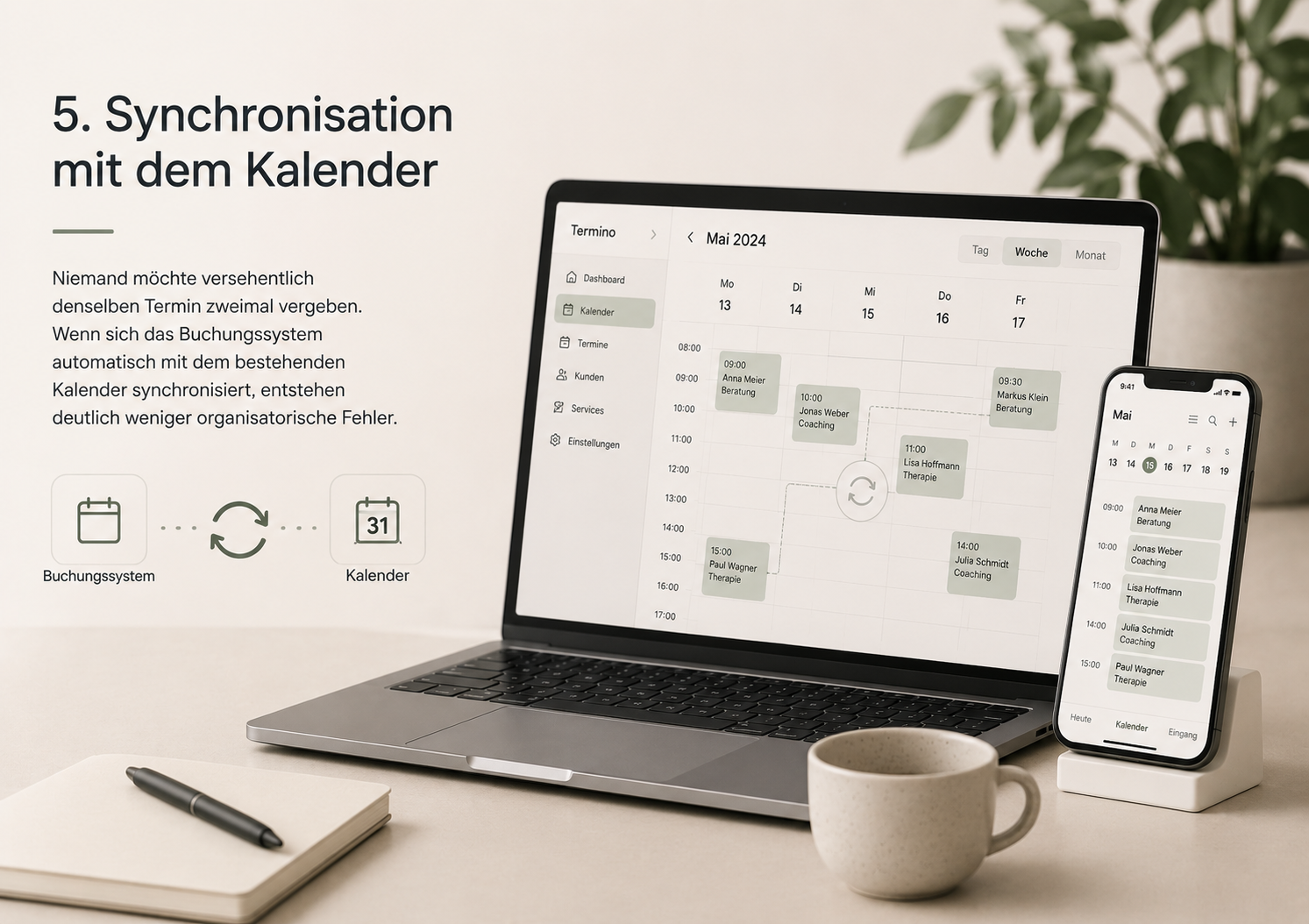
5. A clear calendar overview
Nobody wants to accidentally double-book the same slot. A clear, central overview of all booked appointments helps keep track — especially with multiple staff members or appointment types involved.
More features don't automatically mean better software
Many providers advertise AI, complex automations, or hundreds of features — most of which end up barely used in practice. What matters isn't how many capabilities a system offers, but whether it actually makes the daily workflow simpler. When appointments confirm themselves, reminders go out reliably, and all the information sits in one clear place, that's already most of the job done.
What a simple flow can look like
A patient visits the practice website, selects the service they need and an available slot. If needed, they answer a few short questions in the booking form. A confirmation email follows immediately, and a reminder goes out automatically 24 hours before the appointment. For the practice, this creates almost no extra administrative work.
That's what digital appointment booking should look like: quiet, reliable, and without unnecessary complexity.
Frequently asked questions
Does the booking system need to be hosted in Germany? Not necessarily in Germany, but it should be within the EU. Under GDPR, it's much easier to prove and secure data protection compliance with EU-based hosting than with servers outside the EU. A data processing agreement with the hosting provider should be in place either way.
Can I see all my booked appointments in one place? A good calendar overview built into the booking system is enough for most practices to stay on top of things — no extra syncing with outside calendars needed.
Is a custom solution worth it? It depends on the practice. For some, a standard product is more than enough. But if you have specific workflows, custom appointment types, or particular requirements around data protection and communication, a solution built around how you actually work often pays off.
Conclusion
A good booking system shouldn't change how a practice runs — it should make it simpler. The less time spent on scheduling, emails, and follow-up questions, the more time is left for what actually matters in a therapy practice: the work with people.
I'm currently building my own booking system, designed to make exactly this kind of appointment organization easier for small practices. If you're looking for a simple, clear online booking system, I'd be glad to hear from you.
Need support with your website?
I help with WordPress fixes, technical SEO, automation and booking systems — pragmatic, without unnecessary overhead.
Get in touchGet in touch